Measured, not modelled.
A 30-day before-and-after study in a Victorian solid-stone house in Cornwall, co-authored with Verto Homes — run through the wettest winter the region had seen since 1836.
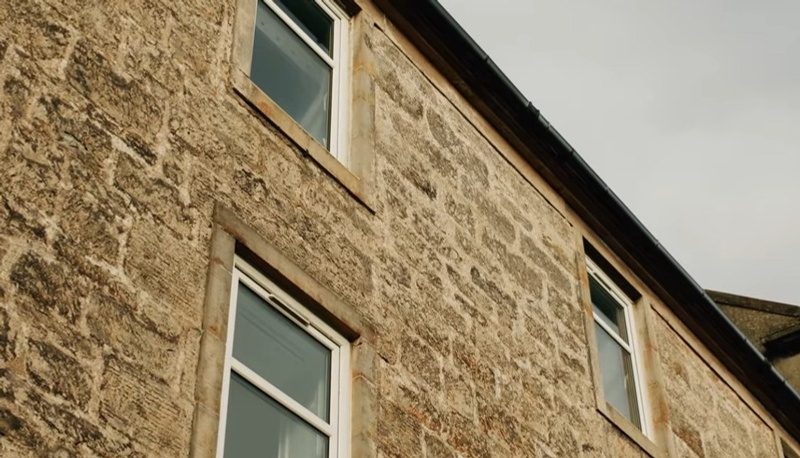
One room, fully instrumented, through a real Cornish winter.
Heat loss through the solid wall accounted for roughly half of the room's total. We measured temperature, humidity, heat flux and air quality continuously — first as a baseline, then with Warm Walls installed — so every figure is a like-for-like comparison, not a prediction.
What the data showed
Cut by a third — 44% once normalised for wind.
Wall improved from 2.64 to 0.32 W/m²K.
Kept inside the Passivhaus comfort band.
dried out
In the wettest winter on record.
watts per °C of temperature difference
Healthier homes, not just warmer ones
Healthy humidity
Held in the 45–55% range that's best for human health — cutting dust-mite and mould-allergen risk.
Cleaner air
Fine-particulate levels — PM10, PM2.5 and PM1.0 — fell across every category during the test.
No damp, no mould
A breathable build prevents the condensation and mould that trigger asthma in cold homes.
Non-toxic
Natural wool, cork and wood-wool — no added formaldehyde or harsh chemicals.